
In my first ever guest post, business mentor Astrid Bracke writes about how she has built a thriving business through marketing without social media. She shares the gentle strategy she uses to find new clients without engaging in hustle culture, and offers some tips and questions to support you to do the same. I’ve been a long-time admirer of Astrid’s approach to marketing and running a solo business, and I’m delighted she is sharing her wisdom with us here. Over to Astrid…
This autumn it’s been 5 years since I left social media—and I still get a lot of questions about it. All of them come down to the same thing: isn’t marketing without social media a really bad idea as a small online business? As my story shows, it isn’t. In this post I’ll share about leaving social media, how new clients find me without it and suggest some new steps if you want to market differently too.
Why I left social media
When I started my business in late 2018, I didn’t question marketing on social media at all. I used Facebook and Instagram, as well as my website and newsletter. While I dropped Facebook relatively quickly, I worked hard on Instagram. I joined challenges and courses, made content plans and had theme days. I researched hashtags and used them diligently. But it never quite worked for me. I struggled to create images that reflected my brand. I struggled with inspiration. I struggled with the pressure of having to post, respond and interact.
I didn’t have a lot of followers on Instagram when I left, and had fewer than 200 people on my newsletter list. I’d begun dipping my toe into Pinterest, but was very much in the early stages there. While I’d had my website in various forms for years, in October 2021, the month I left, I had 574 visitors—heavily boosted by the launch I ran that month (which attracted 235 views, though certainly not that many sales).
In short: my business was small, my audience was small and I seemed to be in no position to leave a channel as important as Instagram. And yet I did.
In the year that followed, I spent a lot of time getting really clear and intentional about marketing. I asked myself what my strengths were, what I enjoyed (writing!), which channels I wanted to do more with and if I wanted to add anything new. Most of all, I wanted my marketing to finally feel easeful, rather than something I resented.
The marketing channels I chose instead
Website
My website is my hub, my digital home. This is the platform I have the most control over: whereas pretty much every other channel is subject to the whims of algorithms, I call the shots here. Ultimately, I want all of the channels I use to lead to my website, and to make it easy for my audience to reach it from other platforms.
When I look at my website stats, the biggest referrers are search engines: nearly ⅔ of website visits comes through them. Partially this is because I’ve had my website for a pretty long time, though I didn’t always use it for my business, and established websites tend to do better on search engines.
But my website also does well because I keep it updated every single month. I soon learned that I couldn’t keep up with writing blog posts as well as newsletter posts, so I landed on an alternative: repurposing newsletter posts as blog posts. This takes relatively little time: I change the title and often the intro, remove any newsletter specific passages or references, and the post is ready to upload. Through podcasts and guest posts my website is also connected to other websites, which improves credibility and thereby SEO.
A good chunk of traffic to my website comes through Pinterest, and clients mention finding me there. Once my old newsletters are posted as blogs, they are shared through Pinterest. I used to do this myself, but once my business picked up, I outsourced this to Laura McMahon, a wonderful digital strategist. She creates 3 to 4 pins for each blog post.
What I love about Pinterest is that old pins don’t lose value—unlike old posts on social media. I also chose the platform because it allows scheduling (something much social media didn’t for a long while), and because while it may look like social media, it isn’t. Social media, as I define it, rewards you for your attention: not just for the number of posts you post, but for the time you spend on the app engaging. It also tends to want to keep you there, making clicking through more difficult. Pinterest, on the other hand, likes to define itself as a “visual search engine”, built to encourage people to click through.
Substack newsletter
I moved my newsletter to Substack in late 2022, and while it’s certainly not the magic growth machine it’s sometimes believed to be, Substack does help new clients find me. It’s the third biggest referrer to my website, and a little less than half of my new newsletter subscribers come through the Substack network (such as recommendations and shares by readers). I send out a free newsletter twice a month and for me it’s the number one way in which I share about my approach to business, and help people decide to work with me.
“If any part of your marketing doesn’t work for you, your needs or your life, you get to change it. It’s your business, and you get to set the rules.”
Recently I added YouTube to my marketing ecosystem as well. Much like Pinterest, I see it not so much as social media, but as a visual search engine—and as a way of expressing my creativity and learning new skills. It’s early days still so I can’t say much yet about whether it brings it many new people, but so far I’m enjoying it.
If you want to market without social media too
I know and mentor many people who use and enjoy social media. If you’re not one of them, however, consider this your gentle permission slip to leave. Marketing without social media is not just for big businesses that have large audiences on other channels. If any part of your marketing doesn’t work for you, your needs or your life, you get to change it. It’s your business, and you get to set the rules.
Start by asking yourself some questions:
Where are my strengths when it comes to marketing? Video, audio, photography, writing, drawing?
Which parts of my current marketing feel good and easeful? Which leave me feeling overwhelmed or unfulfilled?
Which parts of my marketing can I do more with? For instance, because writing comes easily to me and I enjoy it, I changed my newsletter from once a month to twice a month.
How do the different parts of my marketing work together? Are there any channels that seem to be separate, or unconnected from others?
What is important to me when choosing channels? Think about frequency; being rewarded for your presence or attention; ability to schedule; lifespan of content; certain companies that you want to avoid, etc.
Once you’ve answered these questions, compare your answers to the channels you currently use. What needs to go and what can stay?
If you’d like to read more about why and how I left social media, and how I market my business now, these blog posts are a great place to start. And if you liked this post, I’d love to invite you to join my newsletter list.
About Astrid
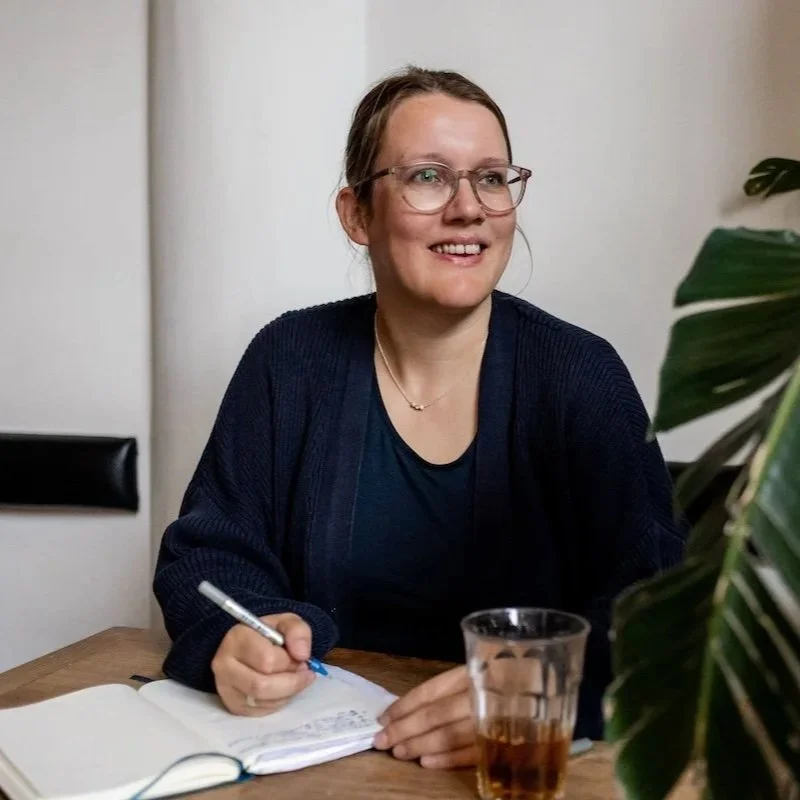
Astrid Bracke is a mentor supporting female small business owners, freelancers and creatives to run slower, gentler and more profitable businesses. She’s passionate about helping them create a business away from the norm of productivity and hustle-culture, choosing a business aligned with their lives, bodies and humanness instead. Find out more about Astrid on her website and sign up for her small business newsletter.
Keep exploring
If you enjoyed Astrid’s post on marketing without social media, you might also like to explore these other posts on my blog:
✉️ 6 tips to create an authentic newsletter people love to read
🖥️ 10 inspiring websites by female+ business owners
📷 Where to find free photographs for your creative business
…and for more posts like this in your inbox, sign up to my email community.